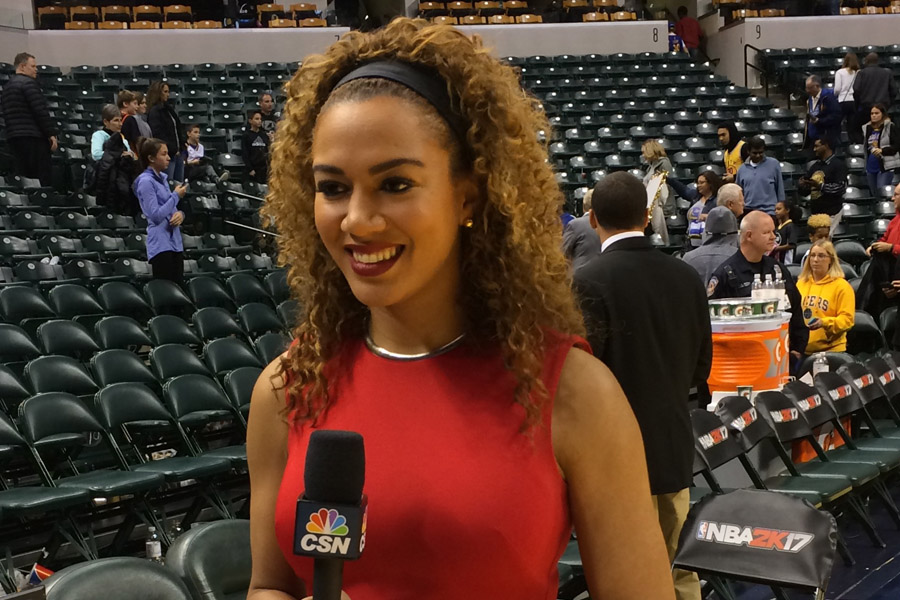
Basic Information
| Field | Details |
|---|---|
| Full name | Rosalyn Gold Onwude |
| Known as | Ros Gold Onwude |
| Birth date | April 28, 1987 |
| Birthplace | Queens, New York |
| National background | American, with Nigerian and Jewish family roots |
| Education | Stanford University |
| College sport | Women’s basketball |
| Professional identity | Sports broadcaster, former player, analyst |
| Known for | Stanford basketball, WNBA and NBA broadcasting, Olympic coverage, strong defensive play |
| Family members discussed here | Pat Gold, Austin Onwude, Annie Gold-Onwude |
A Life Shaped by Two Worlds
Rosalyn Gold Onwude is a rare public figure whose life is like two strong currents meeting in one river. Basketball is fast, disciplined, instinctive, and repetitive. Identity, family, and voice span Queens to Nigeria, Jewish history to modern sports media.
Queens, New York, was her birthplace on April 28, 1987. Because Queens is more than a map, that detail important. It is a crowded stage where languages, cultures, and aspirations bloom. Ros Gold Onwude brought that energy to everything. Long before television cameras, her name was associated with defense, intelligence, and composure.
Her narrative is interesting because she never walks straight. Her life has arcs, turns, and reinventions. Though an exceptional basketball player and a professional sportscaster, she remained connected to family history, tradition, and community work.
Basketball Beginnings and Stanford Years
Rosalyn Gold Onwude’s early basketball story has the shape of a long climb. She played at Archbishop Molloy High School in New York, where she built a reputation as a guard with control, courage, and an unusual understanding of the game. By the time she reached Stanford, she was not simply a recruit. She was a player with a sharpened edge.
At Stanford, she became known for defense first. That is not the loudest skill in basketball, but it is often the one that tells the deepest truth. Defense asks for patience, anticipation, and grit. It asks a player to be a lock on a door while everyone else is chasing points and headlines. Ros fit that mold. She played from 2005 to 2010, endured an ACL injury, returned, and kept rising. Stanford’s run during those years included major postseason success, and she was part of that fabric.
Her college career also revealed leadership. She was not merely filling a role. She was organizing space, reading angles, and turning pressure into order. I see that as one of her signature traits, both on the court and later in broadcasting. She knows how to make chaos legible.
Family Roots That Run Deep
Rosalyn Gold Onwude’s family story is not a side note. It is one of the most important parts of understanding her.
Her mother is Pat Gold, also referred to as Patricia Gold. Her father is Austin Onwude. Her sister is Annie Gold-Onwude. These are the family members most often identified publicly, and each one adds a different shade to Ros’s larger story.
Pat Gold appears to be the emotional center of the family in many public reflections. Ros has spoken about her mother as the person who introduced her to basketball. That detail feels intimate and formative. It suggests a childhood where the game was not just a hobby but a language shared at home. Later, Ros’s tribute to her mother after her passing in February 2026 showed how central that relationship remained. Her mother’s death after a long battle with Alzheimer’s disease marked a deeply personal loss.
Pat Gold’s background is also striking. She is described as a Russian-Jewish woman from Queens, with a family history that reaches back to Riga, Latvia. That gives Ros a lineage shaped by migration, survival, memory, and cultural continuity. In Ros’s own life, Jewish identity is not presented as decorative. It is part of the architecture.
Austin Onwude, Ros’s father, is from Nigeria and lives there. This gives her another deep root, one connected to African identity and transnational family life. I find that blend meaningful because it helps explain why Ros has moved comfortably in many environments. She is not locked into one frame. She carries more than one world at once.
Her sister, Annie Gold-Onwude, also appears in her public story in a significant way. Ros has been connected to Annie through family events and through their shared interest in community and identity. One notable example is their involvement with a Birthright trip, where Ros served on staff alongside Annie as a participant or organizer in that family and cultural setting. They also co-founded a mental health initiative called Sharing The WELLth, which shows that the sisters are not only linked by blood but by purpose. Their relationship seems to hold both affection and action.
Broadcasting Career and Professional Growth
Rosalyn Gold Onwude’s transition from athlete to broadcaster did not feel accidental. It felt inevitable, like water finding its next channel. She had the presence, the authority, and the quick analytical mind that broadcasting rewards. She did not simply report on sports. She interpreted them.
Her broadcasting career includes work with the New York Liberty, the Golden State Warriors, Turner Sports, and ESPN. She became known for sideline reporting, game analysis, and major event coverage. She covered women’s basketball, NBA games, and even Olympic basketball, which says a great deal about the trust she earned.
I think the strongest part of her media work is that she speaks like someone who has been in the gym, in the locker room, and in the pressure cooker. She understands momentum and body language. She understands what players feel when the floor starts to tilt. That gives her commentary a kind of native authority that cannot be faked.
Her achievements in broadcasting also include recognition as an Emmy-winning broadcaster. That matters because it confirms what many viewers already sensed. Her career is not built on novelty. It is built on craft.
Public Presence, Work Achievements, and Net Worth
Rosalyn Gold Onwude is more than a sideline reporter and former player. Her public persona easily transitions between sports, culture, and conversation. She has covered the NBA and WNBA, big brand-facing sports, and community-centered media-social impact programs.
Her accomplishments are diverse. She excelled at Stanford. She broadcast professionally. She shaped major league and team coverage. The industry recognized her. She also entered sports-culture intersections, where modern influence often dwells.
Public net worth estimates fluctuate and are unverified. Be wary of specific numbers. In addition to her financial worth, her career breadth shows her importance. Season by season, she has earned a reputation as layered stone.
Recent Public Attention and Online Mentions
Rosalyn Gold Onwude continues to appear in recent sports conversation. She has remained visible through basketball broadcasts, interviews, social posts, and public tributes. Her recent online presence reflects both work and personal life. She appears in sports settings, around major events, and in moments that show her ongoing connection to the game and to her family history.
What stands out is that her public identity has not flattened over time. It has widened. She is still associated with basketball, but she is also associated with memory, family loss, cultural belonging, and a mature professional voice.
FAQ
Who are Rosalyn Gold Onwude’s family members?
The publicly identified family members I can clearly name are her mother Pat Gold, her father Austin Onwude, and her sister Annie Gold-Onwude. Pat Gold is especially important because she introduced Ros to basketball and shaped her early life. Austin Onwude connects Ros to Nigerian heritage. Annie Gold-Onwude appears as both a sibling and a close collaborator in family and community work.
What made Rosalyn Gold Onwude stand out as a basketball player?
She stood out because she was disciplined, intelligent, and defensive-minded. I see her game as one built on timing and control rather than flash. At Stanford, she became known for durability, leadership, and high-level defensive play. Those qualities made her valuable in big games.
How did Rosalyn Gold Onwude move into broadcasting?
She moved into broadcasting because her basketball background gave her a strong foundation for reading the game. She understood strategy, player movement, and team dynamics. Those strengths translated naturally into sideline reporting and analyst work. Her voice became trusted because it came from experience, not distance.
What is Rosalyn Gold Onwude known for beyond basketball?
Beyond basketball, she is known for her broadcasting career, her cultural identity, and her public role in community-minded projects. She has been tied to mental health advocacy work, family heritage conversations, and high-profile sports coverage. She is not just a sports voice. She is a storyteller with a strong personal history.
Why is Rosalyn Gold Onwude’s family background important?
Her family background matters because it explains the breadth of her identity. She has Jewish heritage through her mother’s side and Nigerian roots through her father’s side. That combination gives her story depth and complexity. It also helps explain why her public presence feels grounded in more than one tradition at once.