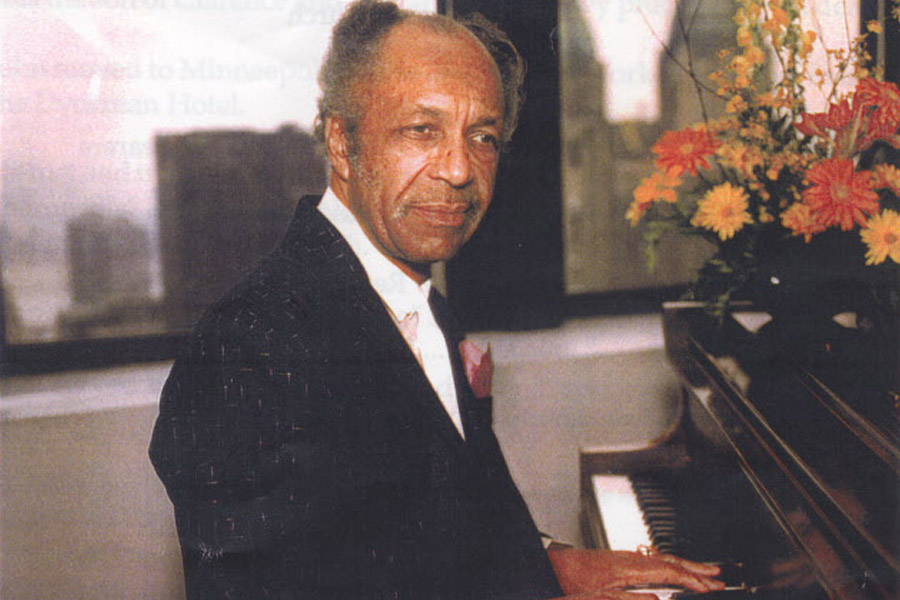
Basic information
| Field | Details |
|---|---|
| Full name | John L Nelson |
| Also known as | John Lewis Nelson, John Louis Nelson, Prince Rogers |
| Born | June 29, 1916 |
| Birthplace | Cotton Valley, Webster Parish, Louisiana |
| Died | August 25, 2001 |
| Place of death | Chanhassen, Minnesota |
| Occupation | Pianist, songwriter, bandleader, working musician |
| Best known for | Father of Prince, local jazz work, family music legacy |
| Main musical group | Prince Rogers Trio |
A life that moved from Louisiana to Minneapolis
I see John L. Nelson as a man who carried two universes. Born in 1916 in Louisiana, he knew hard, rooted earth. The other was Minneapolis, where he became a working musician, family guy, and quiet power behind one of American pop’s most famous musical lines.
He was born in Cotton Valley, Webster Parish, Louisiana, on June 29, 1916. His childhood was tough. After Clarence Allen Nelson and Carrie Nelson divorced, Carrie remarried and reared John in Webster Parish with his siblings. Complexity in the family portrait began early and persisted through generations.
In the early 1930s, John moved north to Minneapolis. That move altered everything. It put him in a city with a thriving music scene, new jobs, and a different lifestyle. He played piano, led bands, and kept music alive while working regular jobs. He didn’t live for stage lights. Like a candle in a window at sunset, he made music after work.
The music of a working man
I think one of the most striking things about John L Nelson is that he never treated music as a fantasy separate from real life. He worked. He supported a household. He also played.
He performed under the stage name Prince Rogers and led the Prince Rogers Trio. That name matters because it later became part of his son Prince Rogers Nelson’s identity. His music life was not a side note. It was a deep current running under the family story.
John also worked regular jobs, including as a hotel doorman and later as a machine operator at Honeywell. That detail gives his story its texture. He was not a celebrity father waiting in the wings. He was a laboring man with calloused hands and a musician’s ear. He composed at night, worked by day, and carried jazz and melody through a life that demanded endurance.
His work as a songwriter became more visible through Prince’s career. Several compositions or songwriting credits tied John to Prince era recordings, including songs such as Father’s Song, Computer Blue, Around the World in a Day, The Ladder, Christopher Tracy’s Parade, Under the Cherry Moon, and Scandalous! These connections turned his quiet musical presence into part of a larger family echo. His art did not vanish. It traveled forward through his son.
John L Nelson and Mattie Della Shaw Baker
The family center of John L Nelson’s adult life was his marriage to Mattie Della Shaw Baker. She was a singer, and the two were linked through music before marriage. Their relationship shows how closely art and home life were braided together in this family.
They married on August 31, 1957. Mattie was more than a spouse in the ordinary sense. She helped shape the household where music was present in the air like humidity before a storm. Together they formed the core of the household that would give rise to Prince and Tyka Nelson.
I see their marriage as one of the defining facts of John’s life. It was not only a family union. It was a musical partnership inside a changing mid century America. Their home was where rhythm, discipline, creativity, and pressure all lived under the same roof.
Children, siblings, and the wider family map
John L Nelson’s family tree is wide, and each branch carries a different shade of the same light. When I lay out the family members, I get a clearer picture of his place in the Nelson story.
Parents
His parents were Clarence Allen Nelson and Carrie Nelson. Carrie later remarried Charles Ikner and continued raising children in Webster Parish. That early family shift shaped John’s beginnings and helped set the tone for a life that often moved between stability and change.
Siblings
His siblings included Gertrude, Olivia, Ruby, and James. These names matter because they remind me that John came from a larger family world, not from isolation. Even before his own children arrived, he was already part of a crowded family circle.
First family
With Vivian Howard Nelson, John had children who became part of the broader Prince family story. Their names include Sharon L. Nelson, Norrine Nelson, Lorna L. Nelson, John R. Nelson, and Duane Nelson. The family history around these children is sometimes tangled, especially in later public accounts, but they remain central figures in the Nelson household narrative.
Sharon L. Nelson stands out because she later played a major role in preserving and presenting her father’s music. She became a guardian of his creative legacy. Norrine Nelson, Lorna L. Nelson, and John R. Nelson also remain important as members of the generation that grew up inside John’s world. Duane Nelson is often discussed in family histories as part of the home environment around Prince and the Nelson family, even though later research complicated his biological status. In the family story, he still matters because he was part of the lived reality around the house.
Second family
With Mattie Della Shaw Baker, John had Prince Rogers Nelson and Tyka Evene Nelson.
Prince became the thunderclap that changed global music. Yet I never see his fame as separate from John. The name Prince itself came from John’s stage identity, and the musical inheritance came from a home where piano, performance, and discipline were ordinary.
Tyka Evene Nelson carried her own creative path as a singer and songwriter. She was not only Prince’s sister. She was John’s daughter and part of the family’s musical bloodstream.
Grandchildren
John’s grandchildren include Amiir Gregory Nelson, who was Prince’s son, and President LenNard Laeil Nelson and Sir Montece Laeil Nelson, who are Tyka’s sons. These grandchildren extend John’s legacy into a third generation. The family story did not stop with him. It kept branching, like roots under soil, unseen in places yet still feeding the tree.
A legacy shaped by quiet force
John L Nelson was less famous than Prince, but his effect was significant. It was fundamental. I think his life shows how one person can change history without being famous.
A hardworking musician. Deceased father. A spouse whose home shaped American music. A songwriter whose work found a second life through his son and later through posthumous releases of his own compositions.
His August 25, 2001, death in Chanhassen, Minnesota, ended one chapter but not the story. The story continues in Prince’s music, Sharon’s job, Tyka’s life, and his descendants. The legacy of John is like an old song in a different key. The music changes but the line stays.
FAQ
Who was John L Nelson?
John L Nelson was a pianist, songwriter, and bandleader from Louisiana who later lived in Minneapolis. He is best known as the father of Prince and Tyka Nelson.
What was John L Nelson’s stage name?
He performed as Prince Rogers and led the Prince Rogers Trio.
Who were John L Nelson’s parents?
His parents were Clarence Allen Nelson and Carrie Nelson.
Who was John L Nelson married to?
He married Vivian Howard Nelson first, and later married Mattie Della Shaw Baker in 1957.
How many children did John L Nelson have?
Based on the family material, he had several children, including Sharon L. Nelson, Norrine Nelson, Lorna L. Nelson, John R. Nelson, Duane Nelson, Prince Rogers Nelson, and Tyka Evene Nelson.
Why is John L Nelson important in music history?
He mattered because he was a working musician whose songs, playing, and family home helped shape Prince’s early musical world. His influence moved through generations, not just through records.
Did John L Nelson have a public net worth?
No reliable public net worth figure appears in the material. His life is documented more through work, family, and music than through finances.
What is John L Nelson’s lasting legacy?
His lasting legacy is the family and musical foundation he left behind. He helped shape one of the most important musical families in modern popular culture, while also building a life as a pianist and working man.