The Many Lives of J. Howard Marshall
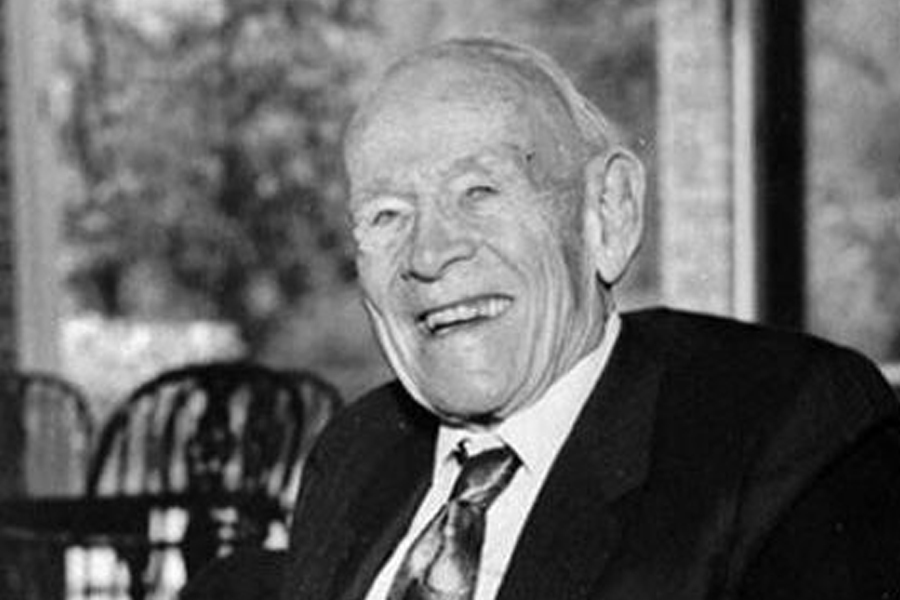
I examine J’s life. I notice no public identify for Howard Marshall II. In America, he was a professor, lawyer, government official, oil strategist, billionaire, spouse, parent, and the focus of one of the most famous inheritance conflicts. In 90 years, from January 24, 1905, to August 4, 1995, he accumulated a fortune that changed everyone’s future.
In Germantown, Philadelphia, Pennsylvania, James Howard Marshall II was born. His Quaker upbringing instilled discipline and moderation. The tale that followed was anything from calm. Long American epic, Ivy League rise, oil boom narrative, family courtroom drama.
He was talented and competitive. He was an All-American soccer player and a top tennis player in his youth. Details indicate a distinctive quality. Marshall did not succeed by chance. He pursued it like a last-second athlete pursuing a lost ball.
Education, Law, and an Early Intellectual Reputation
Marshall attended Yale Law School in 1931 after graduating from Haverford College in 1926. That road alone would have made him successful, but he continued. He was regarded as a lawyer and legal scholar interested in petroleum regulation and bankruptcy. His thinking easily switched between theory and strength. He could write about systems and then manipulate them.
Early roles showed his contradictory character. He was Yale’s assistant dean and a lawyer and advisor for Standard Oil of California and Pillsbury Madison Sutro. He went beyond academia. Instead, he used law to navigate commerce.
That decision shaped the rest of his life. By understanding regulation, ownership, and corporate structure, Marshall positioned himself to thrive in oil and gas at a time when the industry was becoming one of the great engines of American wealth.
Building an Oil Empire
Marshall made his fortune in the petroleum sector through senior roles, investments, and strategic agreements over decades. He led Ashland Oil and Refining Co., Signal Oil & Gas, Union Texas Petroleum, and Allied Signal. These were major posts. He entered the energy industry’s lifeblood.
In the 1950s, he co-founded Great Northern Oil Company with Fred Koch, his biggest financial move. That link changed everything. Marshall reportedly owned 16% of Koch Industries via it. His riches was built on such ownership.
Marshall created his riches like a reservoir, not brick by brick. The public didn’t always perceive the depth, but pressure built. At his death in 1995, his net worth was estimated at $1.6 billion to $2 billion, with some higher appraisals due to his Koch-related interests.
He formed Marshall Petroleum, Inc. in 1984 to manage his assets. That action showed a guy in his late 70s methodically guiding his enterprise. He was one of the great private beneficiaries of the American oil age, understanding the boardroom and legal fine print that preserved wealth.
A Life of Public Power and Private Contradictions
Marshall’s personal life was as layered as his business career. He married three times, and each marriage marked a different chapter of his adult life.
The 1931 marriage to Eleanor Pierce was his first. After 30 years, they divorced in 1961. They had two sons, J. H. Marshall III and E. Pierce Marshall. In theory, this was the Marshall line’s foundation family. Later decades revealed unhealed fractures.
When his first marriage dissolved in 1961, he married Bettye Bohannon. She died of Alzheimer’s in 1991, ending their marriage. Many describe this phase as faithful, declining, and emotional. Marshall had a long-term involvement with another lady throughout Bettye’s sickness, complicating his personal life.
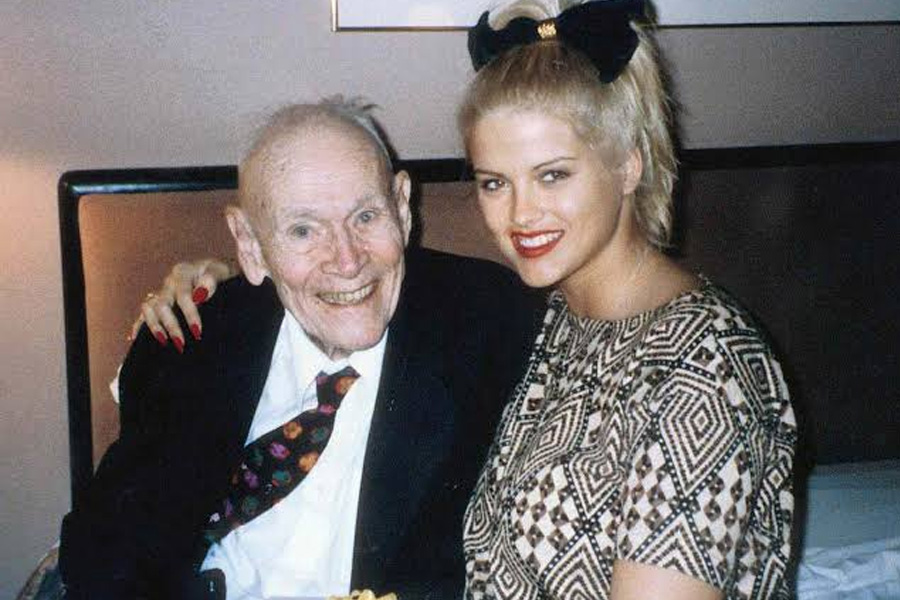
His connection made him renowned worldwide. Anna Nicole Smith, 26, born Vickie Lynn Hogan, was his wife in 1994 at 89. Instantly, their 14-month marriage made headlines. Many saw it as a clash of riches, age, glamor, and distrust. This marriage changed Marshall’s legacy permanently, despite what others thought.
Anna Nicole Smith and the Final Chapter
Marshall met Anna Nicole Smith at a Houston strip club in 1991. Their friendship developed in his latter years, when he was older, rich, and physically weakened but still making headlines. Due to their 63-year age disparity, their 1994 marriage captivated the public. Motives, affection, dependency, and image were disputed. Marriage became a national spectacle.
Smith later claimed that Marshall had promised her financial security and substantial support. But when he died on August 4, 1995, in Houston, Texas, she was left nothing in his will. That fact lit the fuse for legal warfare that would continue for years after both of them were gone.
The conflict went beyond celebrities. It became a big probate, bankruptcy, and federal court dispute. The estate struggle led to Marshall and Stern v. Marshall, significant Supreme Court cases. That is, Marshall’s death did not end his story. In another arena, judges and attorneys fought about his intents, his money, and the law’s reach.
The Sons at the Center of the Estate War
J. Howard Marshall III
J. The oldest son was Howard Marshall III, born February 6, 1936. One of the most terrible family relationships was his with his father. He was mostly disinherited, which caused years of conflict. His eventual bankruptcy and financial struggles made the estate issue more than symbolic.
His role is essential because it reveals that Anna Nicole Smith did not instigate the Marshall family discord. Stress was already present. Father-son wounds had been growing for years, possibly decades. Not inheritance invented fracture. It revealed it in court.
E. Pierce Marshall
E. The principal beneficiary of his father’s fortune was Pierce Marshall, born January 12, 1939. He was the youngest son but the strongest after J. Howard Marshall’s death. He worked in the family companies and defended the estate against Anna Nicole Smith and his older brother.
Pierce was fiercely protective of his father’s work. Pierce would guard the vault if J. Howard Marshall built it. He campaigned for years to maintain the estate. He was important to the litigation until his death on June 20, 2006.
His role had emotional impact. He received fortune and embodied his father’s ultimate wishes as the designated successor. Despite being criticized and challenged, he was the most responsible for protecting the Marshall legacy on paper.
The Grandchildren and the Continuing Family Line
The Marshall story did not end with the sons. Through E. Pierce Marshall, the family line continued into another generation that stayed connected to oil, investment, and business management.
E. Pierce Marshall Jr.
E. Pierce Marshall Jr. is a son of Pierce and J. Grandsons of Howard Marshall. His experience includes financial management and family oil companies like MarOpCo. His Yale Law degree is poetic in this family, where law and oil have always flowed like twin pipes.
His presence suggests continuity. The family values of legal sophistication, business discipline, and strategic wealth management did not vanish with the older generation. They were inherited, studied, and adapted.
Preston Marshall
Preston Marshall, another grandson through E. Pierce, has also been involved in oil business leadership, including work with MarOpCo. His role underscores how deeply the petroleum industry shaped the family identity. For the Marshalls, oil was not just a source of money. It was a family language.
These grandsons represent the quieter side of the family’s legacy. They are less associated with scandal and more with stewardship, enterprise, and continuation.
A Quick Family Overview
| Family Member | Relationship to J. Howard Marshall | Key Detail |
|---|---|---|
| Eleanor Pierce | First wife | Married 1931, divorced 1961, mother of his two sons |
| Bettye Bohannon | Second wife | Married 1961, died 1991 after Alzheimer’s illness |
| Anna Nicole Smith | Third wife | Married 1994, received nothing in will, central to estate litigation |
| J. Howard Marshall III | Elder son | Largely disinherited, involved in legal disputes |
| E. Pierce Marshall | Younger son | Primary heir, defended estate in prolonged court battles |
| E. Pierce Marshall Jr. | Grandson | Business and investment involvement, Yale Law graduate |
| Preston Marshall | Grandson | Oil executive connected to family enterprises |
Why His Legacy Still Draws Attention
Marshall is captivating because his life encompasses many American ideas. Rich but academic, quiet but renowned, disciplined but inconsistent. He influenced elite education, federal service, business law, and the oil sector throughout the 20th century.
For many, his name conjures Anna Nicole Smith and the court drama that followed his death. That’s understandable, but not everything. Marshall had built one of the largest energy empires for decades before the news. Not first famous, then affluent. Late-life spectacle made him renowned after he was rich.
His story also endures because it asks old questions that never fade. What does wealth do to family loyalty? Can money clarify intention, or does it only deepen suspicion? When a billionaire dies, is the will a final statement or just the opening bell?
FAQ
Who was J. Howard Marshall?
What was J. Howard Marshall known for?
J. Howard Marshall was known for being an American businessman, lawyer, legal scholar, government official, and billionaire investor in the petroleum industry. He was especially famous for his oil wealth, his stake in what became Koch Industries, and his late-life marriage to Anna Nicole Smith.
When and where was J. Howard Marshall born?
He was born on January 24, 1905, in Germantown, Philadelphia, Pennsylvania.
When did J. Howard Marshall die?
He died on August 4, 1995, in Houston, Texas, at the age of 90.
What was his educational background?
Where did J. Howard Marshall go to college?
He graduated from Haverford College in 1926 and earned his law degree from Yale Law School in 1931.
Was he involved in scholarship or public service?
Yes. He was an accomplished legal scholar, especially in petroleum regulation and bankruptcy, and he also served in public and advisory roles connected to national energy policy.
How did J. Howard Marshall make his money?
What created his fortune?
His wealth came mainly from the oil and gas industry. He held executive roles at major companies, made strategic investments, and owned a significant stake in the business that became Koch Industries.
What was his net worth?
At the time of his death in 1995, his net worth was commonly estimated between $1.6 billion and $2 billion, with some valuations running higher depending on how his holdings were measured.
Who were J. Howard Marshall’s wives?
Who was Eleanor Pierce?
Eleanor Pierce was Marshall’s first wife. They married in 1931, had two sons, and divorced in 1961 after 30 years of marriage.
Who was Bettye Bohannon?
Bettye Bohannon was his second wife. They married in 1961 and remained together until her death in 1991.
Who was Anna Nicole Smith?
Anna Nicole Smith, born Vickie Lynn Hogan, was his third wife. They married in 1994 when he was 89 and she was 26, and their marriage became one of the most publicized celebrity unions of the decade.
Who were his children and grandchildren?
Who was J. Howard Marshall III?
He was Marshall’s elder son, born February 6, 1936. He was largely disinherited and later became involved in estate-related legal conflict.
Who was E. Pierce Marshall?
He was Marshall’s younger son, born January 12, 1939. He became the primary heir and played the leading role in defending the estate after his father’s death.
Who were E. Pierce Marshall Jr. and Preston Marshall?
They were grandsons of J. Howard Marshall through E. Pierce Marshall. Both have been associated with family business interests, especially in oil and investment management.
Why was the estate battle so famous?
Why did Anna Nicole Smith sue over the estate?
Anna Nicole Smith claimed that J. Howard Marshall had promised to provide for her financially, but he left her nothing in his will. That dispute led to years of litigation.
Why did the case matter beyond celebrity news?
The case became important because it raised major legal questions about probate, bankruptcy courts, and federal judicial power. It eventually reached the U.S. Supreme Court and became part of modern legal history.